 Sluit menu
Sluit menu
Sluit menu
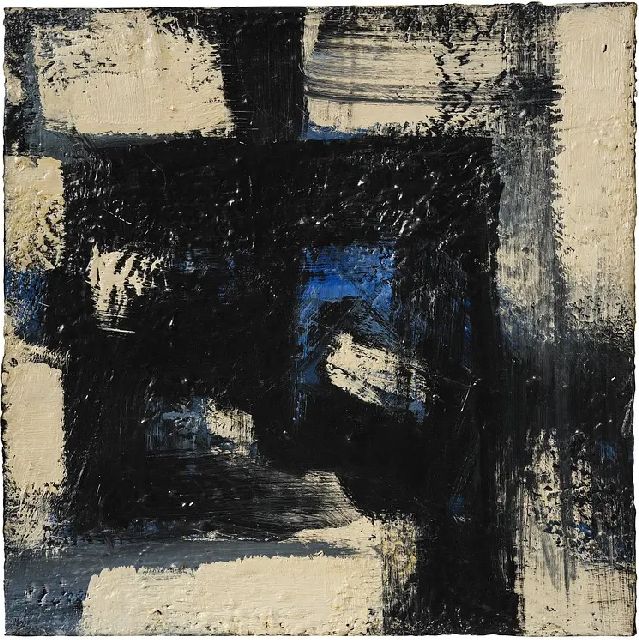
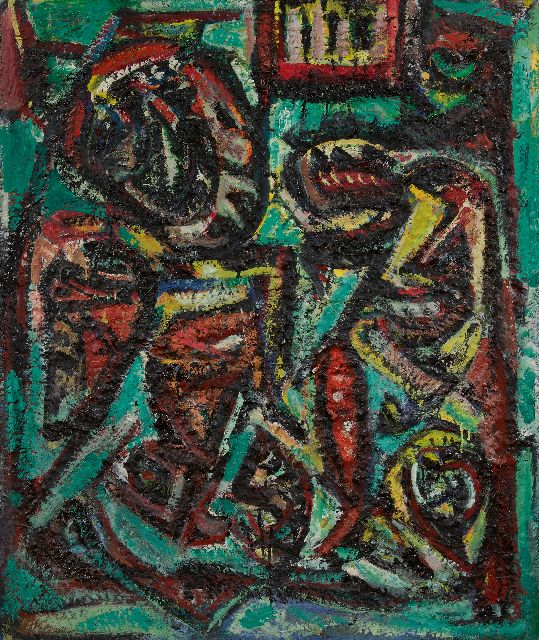
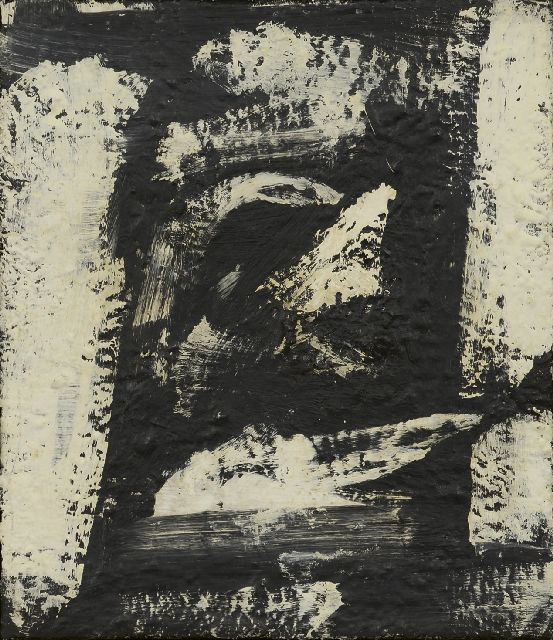
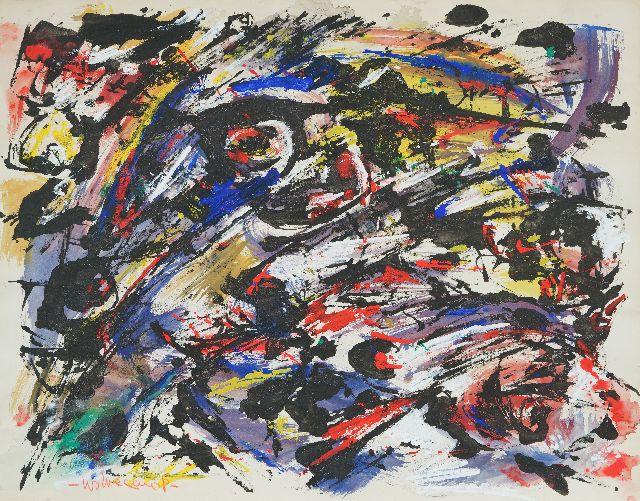
During the Second World War, Theo Wolvecamp, a native of Hengelo, began painting in a cubist style as a teenager and received private drawing lessons. He was inquisitive and educated himself with art books from the library and visits to numerous museums. In 1945, he attended the Art Academy in Arnhem for two years, but when Amsterdam painter Piet Landkroon invited him to work in Amsterdam in 1947, he immediately accepted. He soon came into contact with Corneille, became involved in the founding of the Experimental Group in Holland, and in the autumn of 1948, joined the CoBrA movement. Wolvecamp enthusiastically supported the aims of CoBrA; in a short time, he developed a spontaneous, abstract style of painting with free forms and lines. However, little work from his CoBrA years has survived because, dissatisfied with the results, he destroyed or painted over much of it. Although Wolvecamp was one of the early experimental painters, his style differed from that of Appel, Corneille or Constant. While they were inspired by children's drawings and bright colours, Wolvecamp opted for introspective, monochrome expression. From 1953 to 1954, he worked in Paris, after which he returned to the relative isolation of his birthplace, Hengelo. Wolvecamp was not a man of noise and opposed superficiality, fashion, and haste, and his seclusion was a necessary condition for painting. In Twente, stocking manufacturer Hans de Jong offered him studio space. De Jong was one of the few collectors in Twente who followed the development of modern art internationally. Wolvecamp, who had kindred spirits in Denmark and France, among other places, was able to advise him and put him on the trail of Appel, Willem de Kooning, and the Danish artists of Cobra: 'Sometimes I had to argue for six months before he would agree to buy something by these artists.' After a 'Miró-like' beginning, Wolvecamp created abstract expressionist works in thick layers of paint and dark colours. He experimented with various techniques and materials—chalk, ink, and watercolor—using pen and brush, revealing his preference for the colors red, yellow, blue, and black. From 1955 onward, the influence of Danish CoBrA member Asger Jorn became apparent, and fantasy creatures and other figurations of animals or humans appeared in his compositions. His dense paintings from this period, with their meandering lines, formed a unique visual alphabet of patterns and signs. Later, this evolved into what he called his 'inner landscapes.' From 1970 onward, a twenty-year period followed during which Wolvecamp sought to find his definitive style. He struggled with paint applied to the canvas in large quantities. His paintings became more plastic, heavier, and more layered, becoming more mysterious and dramatic than before. He earned the nickname 'Théofiel,' meaning 'God-loving,' which refers to the spiritual dimension in his work, and writer Ed Wingen called him the God-seeker in paint.' Wolvecamp was not a man of noise, but of resistance, against superficiality, fashion, and haste. His seclusion wasn't isolation, but a necessary condition for painting. He never felt the need to show his work just anywhere, but the exhibitions where it was shown were without exception highly regarded. In Twente itself, interest in the already internationally renowned artist only came later.