 Sluit menu
Sluit menu
Sluit menu
Jan Roëde was born in Groningen in 1914. From the age of four, he grew up in The Hague, where—apart from a few periods abroad—he lived and worked until the end of his life. He trained as an art teacher and subsequently studied drawing and evening classes in advertising painting at the Royal Academy of Art. He worked for several years as an advertising illustrator, but in 1941 changed course when fellow artist Willem Hussem recommended painting. From the outset, colour and form were the primary themes he expressed in his work.
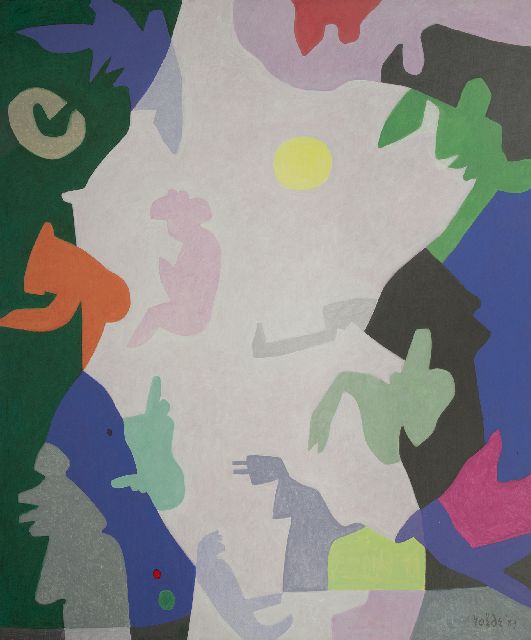
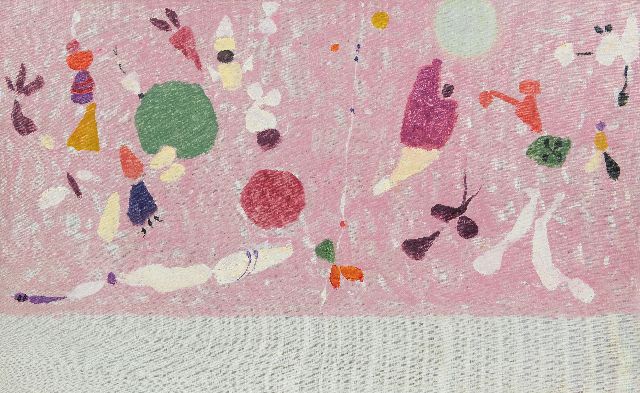
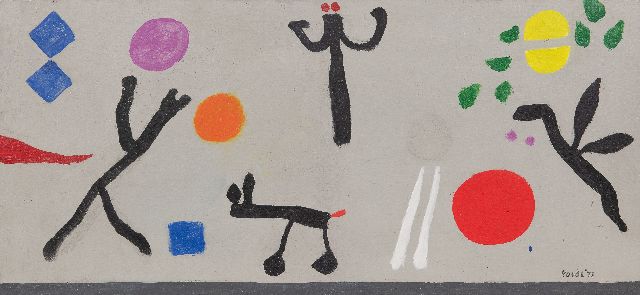
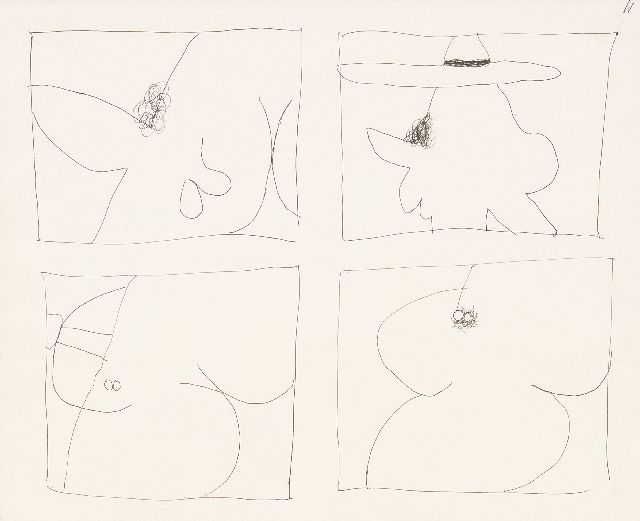
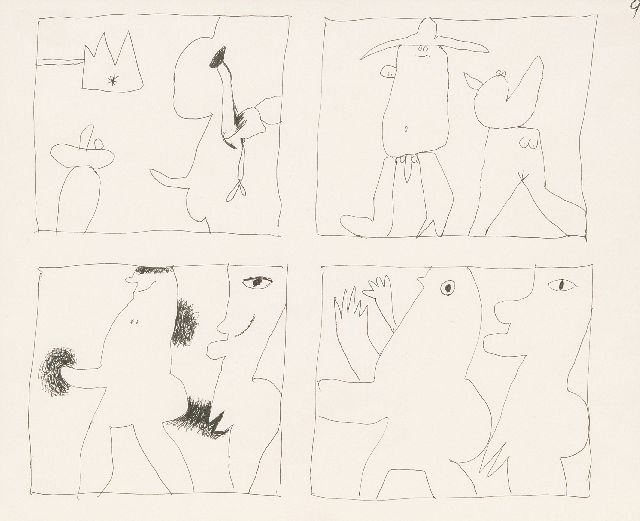
When he exhibited for the first time after the war in The Hague at Kunsthandel Martinus Liernur, his work was noticed by Willy Broers, the later founder of Vrij Beelden en Creatie, who invited him to participate in the exhibition '12 Schilders' at the Stedelijk Museum in Amsterdam in 1946. Between 1946 and 1948, Roëde lived alternately in Sweden and France, where he achieved success with several solo exhibitions. In Paris, he 'Frenchified' his name to Roëde to make it easier for the French to pronounce, and after returning to the Netherlands, he decided to keep it that way. Roëde's work from this period was influenced by that of Klee and Picasso, and the abstract surrealism of Miró. During his stay in Paris, Roëde also discovered the principle of 'reversed colour perspective' by the painter Maurice Estève, a compositional technique in which cool colours are used in the foreground and warm colors in the background, a technique that Roëde would continue to employ in all his subsequent work. Roëde, who drew inspiration from Buddhist Zen philosophy, among other sources, was a relatively independent artist whose work leaned somewhat towards that of Cobra. Although his work bore some resemblance to that of the CoBrA group, founded in 1948, he decided against joining it – he could not identify with its fanatical idealism.
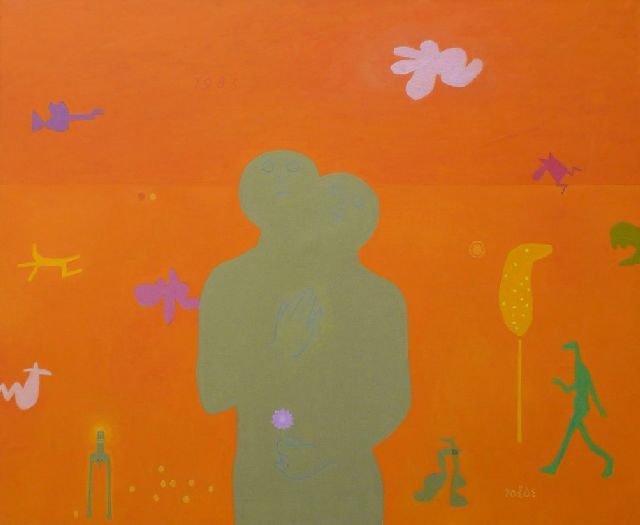
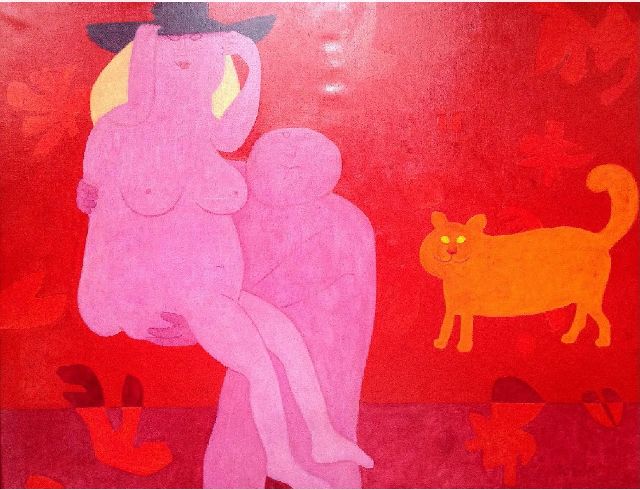
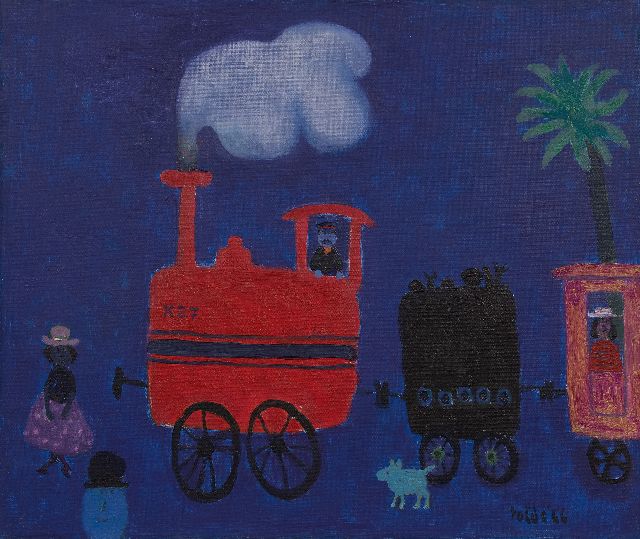
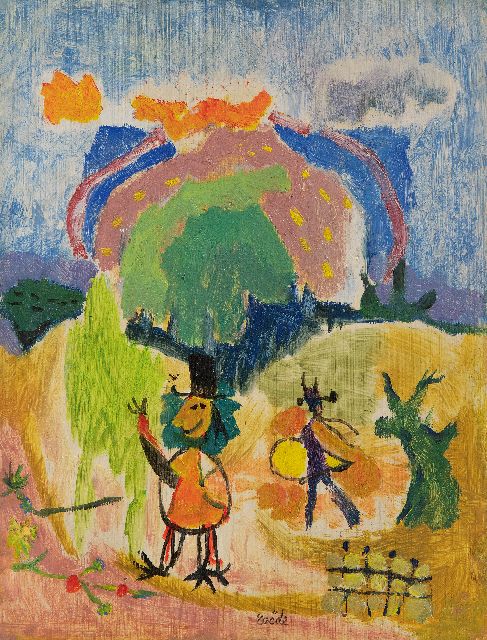
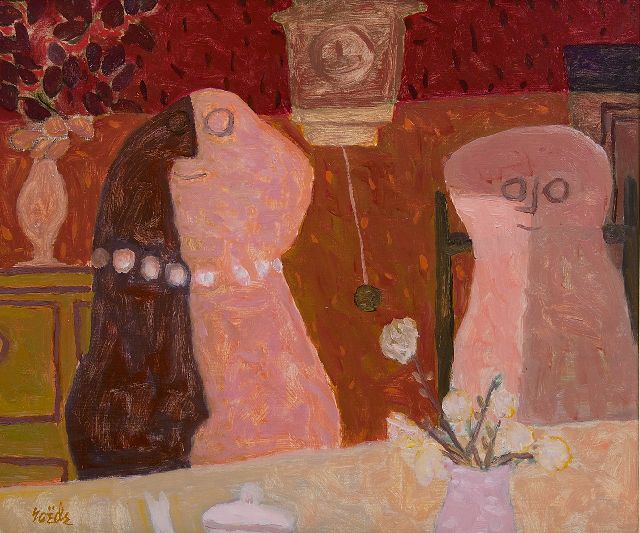
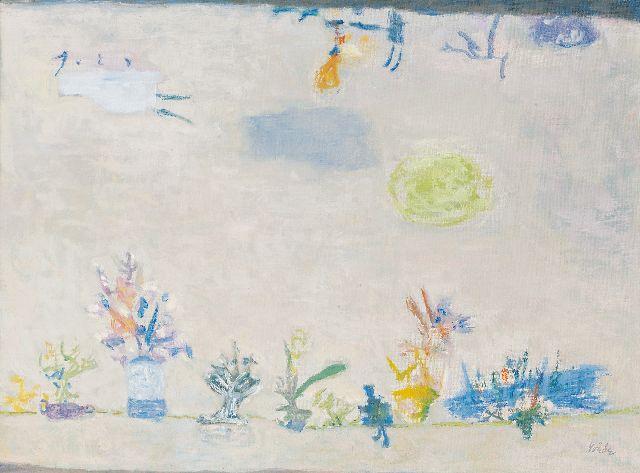
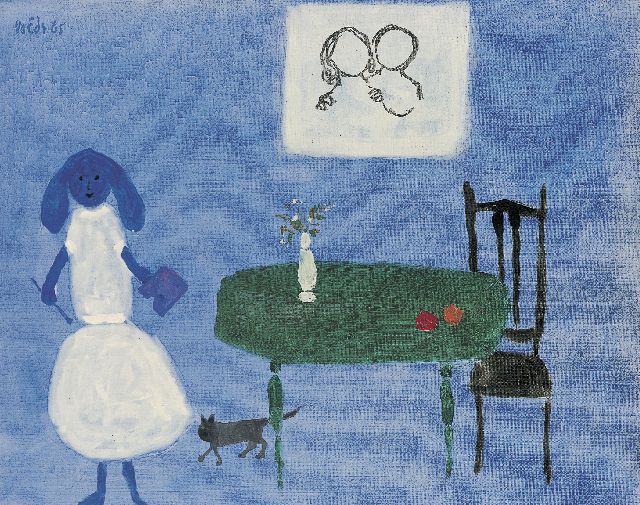
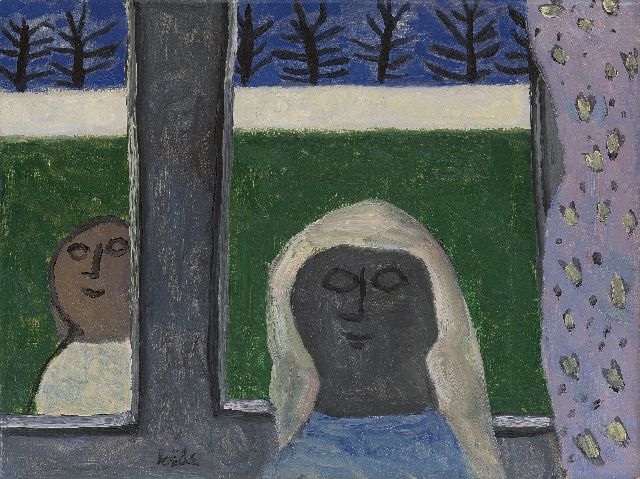
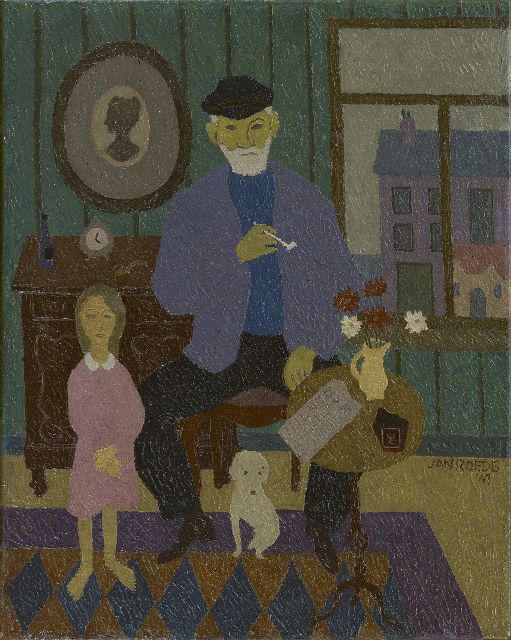
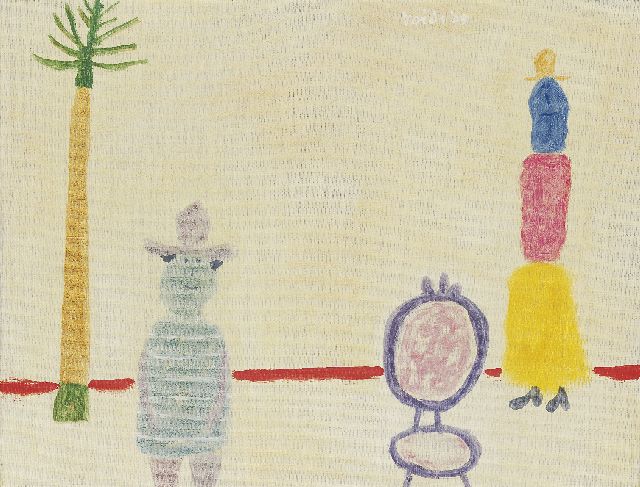
Jan Roëde developed into a surprising colourist with a unique style. He playfully experimented with combinations of abstract backgrounds and foreground figures in interiors and landscapes. His abstract style, consisting of loose lines and planes, gradually gave way to compositions of continuous colored planes. In the 1950s, he found his definitive style, consisting of simplified human and animal figures, applied to the canvas in unrealistic, very thinly painted colours. From the second half of the 1960s onward, his use of colour became brighter and more even. During this time, his work was also increasingly appreciated, including by critics who, during his first exhibition at Liernur, dismissed it as that of a six-year-old child. Until the end of his life, Roëde remained a member of the Hague Pulchri, and in 1968, the Hague Gemeentemuseum dedicated its first retrospective to his work.